
Think about the last time travel went sideways for you.
A cancelled flight. A hotel with no record of your booking. A cruise reservation you needed to change at 11 PM. You picked up the phone, braced for the hold music, and started mentally rehearsing the story you’d have to tell — again — to whoever finally answered.
That experience has defined travel customer service for decades. Not because the industry didn’t care, but because the complexity was genuinely hard to solve at scale: thousands of passengers, hundreds of concurrent disruptions, and legacy systems that didn’t talk to each other. Human agents overwhelmed and under-informed.
That’s now changing — not incrementally, but structurally.
Agentic AI has entered the travel contact center and it’s rewriting every stage of the traveller journey. This isn’t a chatbot upgrade or automation that deflects calls and hopes for the best. It’s a fundamentally different architecture — one where AI systems reason, plan, act across multiple systems, and hand off to humans with full context when the situation genuinely calls for it. Here’s how it’s playing out across four angles.
The Market Reality: Numbers That Frame the Shift
The global AI customer service market is projected to reach $15.12 billion in 2026, growing at a 25.8% CAGR toward $117.87 billion by 2034. Travel and hospitality are driving that growth disproportionately — the industry’s combination of high interaction volume, high emotional stakes, and multi-system complexity is exactly where agentic AI’s strengths show most visibly.
Trip.com’s three years of TripGenie usage data, published in March 2026, tells the story in concrete terms: AI-assisted order volume grew approximately 400% year-on-year, and nearly 60% of all interactions are now booking-related — not browsing or research. Travellers aren’t just asking questions anymore. They’re completing transactions through AI.
The expectation gap, though, remains significant. Ada’s 2026 Agentic CX Report found that resolution rate is the metric consumers rank most important — yet businesses rank it seventh. Only 24% of consumers say their issue was fully resolved by an AI agent without human intervention. In travel, that gap compounds into lost loyalty. When a disruption isn’t handled well, the next booking goes elsewhere.
The competitive window to close that gap is narrowing fast. IDC’s 2026 hospitality research captured the stakes plainly: in an agentic world, if your data is incomplete or fragmented, you disappear from the AI agent’s decision set entirely.
Angle 1: Airlines — From Reactive Queue to Proactive Resolution
The traditional airline contact center was built for volume management, not resolution. IVR trees routed calls. Agents worked with fragmented system access. A single weather event could generate 50,000 simultaneous contact attempts, with passengers calling about the same cancelled flight getting different answers depending on which agent picked up.
The hold time was never a failure of effort. It was a failure of architecture. Agentic AI attacks that architecture directly.
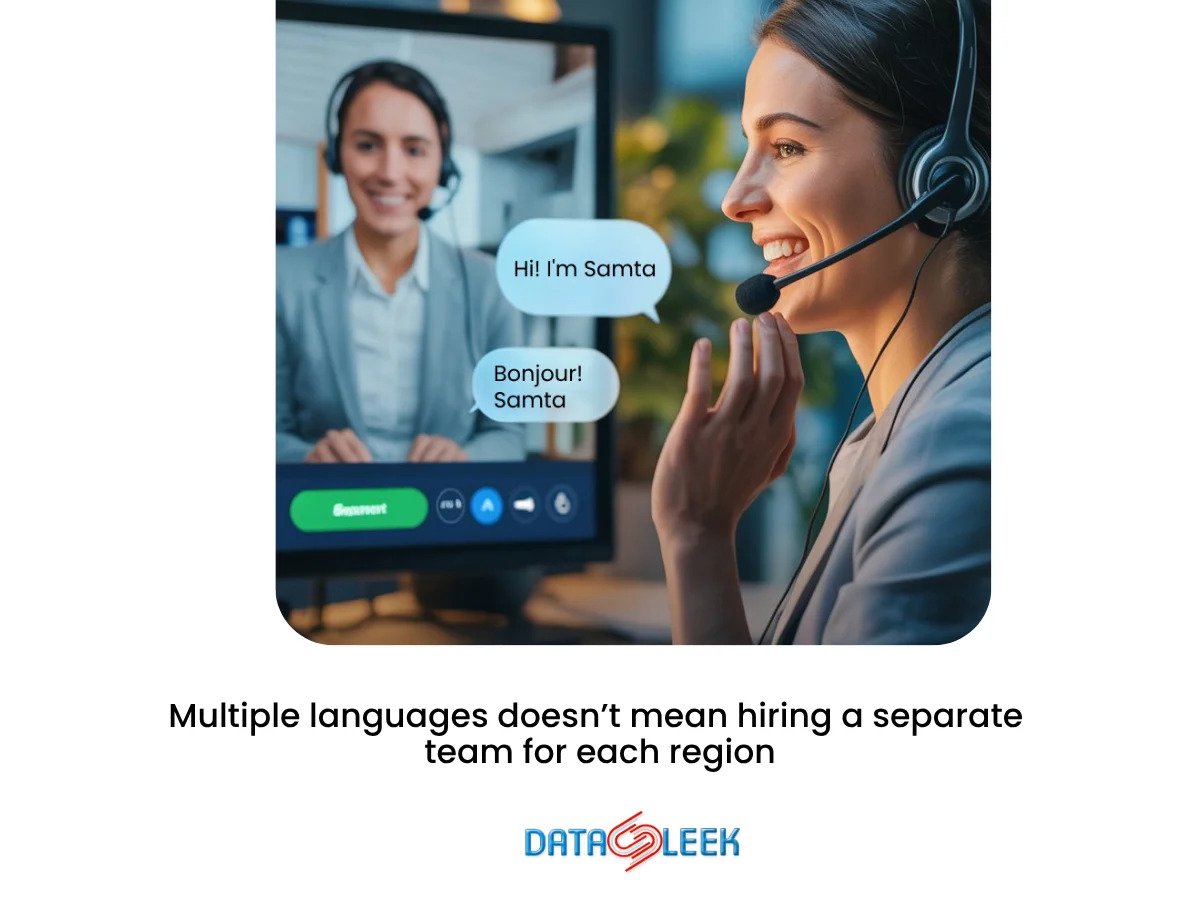
Malaysia Airlines launched “Mavis” in February 2026 — an AI customer service agent built on Ada’s Agentic Customer Experience (ACX) platform, operating 24/7 across the airline’s website, app, and email in English and Malay. Mavis handles the full range of high-volume passenger queries: flight status, booking details, check-in, boarding gates, fare discovery, and seat upgrades. What distinguishes it from legacy chatbots is what happens at the edges: when a situation exceeds its authority, Mavis transitions the conversation to a live agent with full context intact. The passenger doesn’t repeat themselves. The agent doesn’t ask what happened. The handoff is clean.
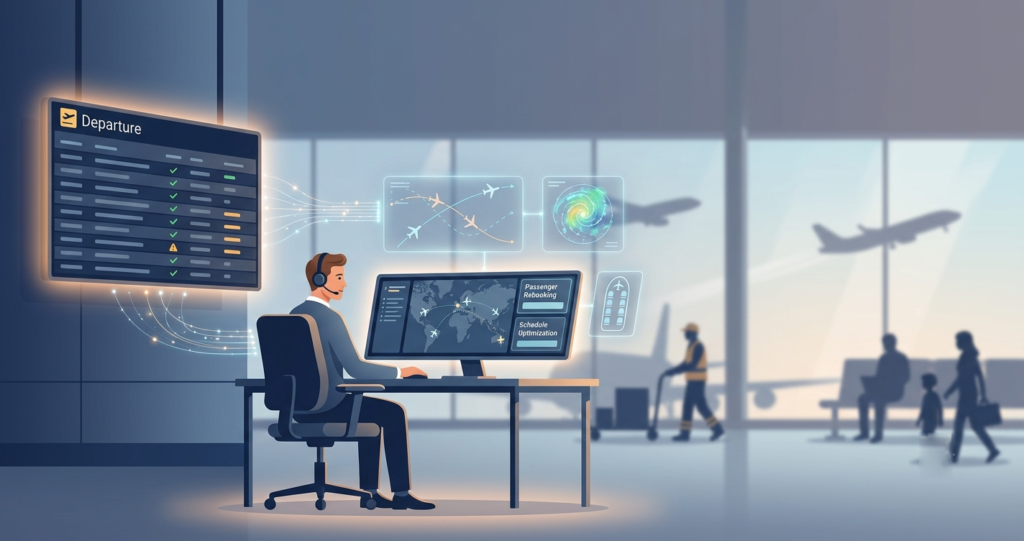
United Airlines takes a complementary approach — using predictive analytics AI to anticipate disruptions before they generate inbound demand. By analyzing weather patterns and air traffic data, the system enables proactive passenger communications and pre-emptive rebooking. When a disruption is acted upon before passengers start calling, a contact surge becomes an outreach event. The contact center shifts from firefighting to orchestration.
And in March 2026, Sabre, PayPal, and MindTrip announced the travel industry’s first end-to-end agentic booking pipeline: conversational AI trip planning connected to real-time inventory across 420+ airlines and 2 million hotels, with integrated payment completing the entire search-book-pay loop in a single conversation. No form, no redirect. This is a structural shift in who controls the booking funnel — and its implications for how airline contact centers are designed will play out over the next three years.
Angle 2: Hotels — From Standard Scripts to Loyalty-Aware Personalization
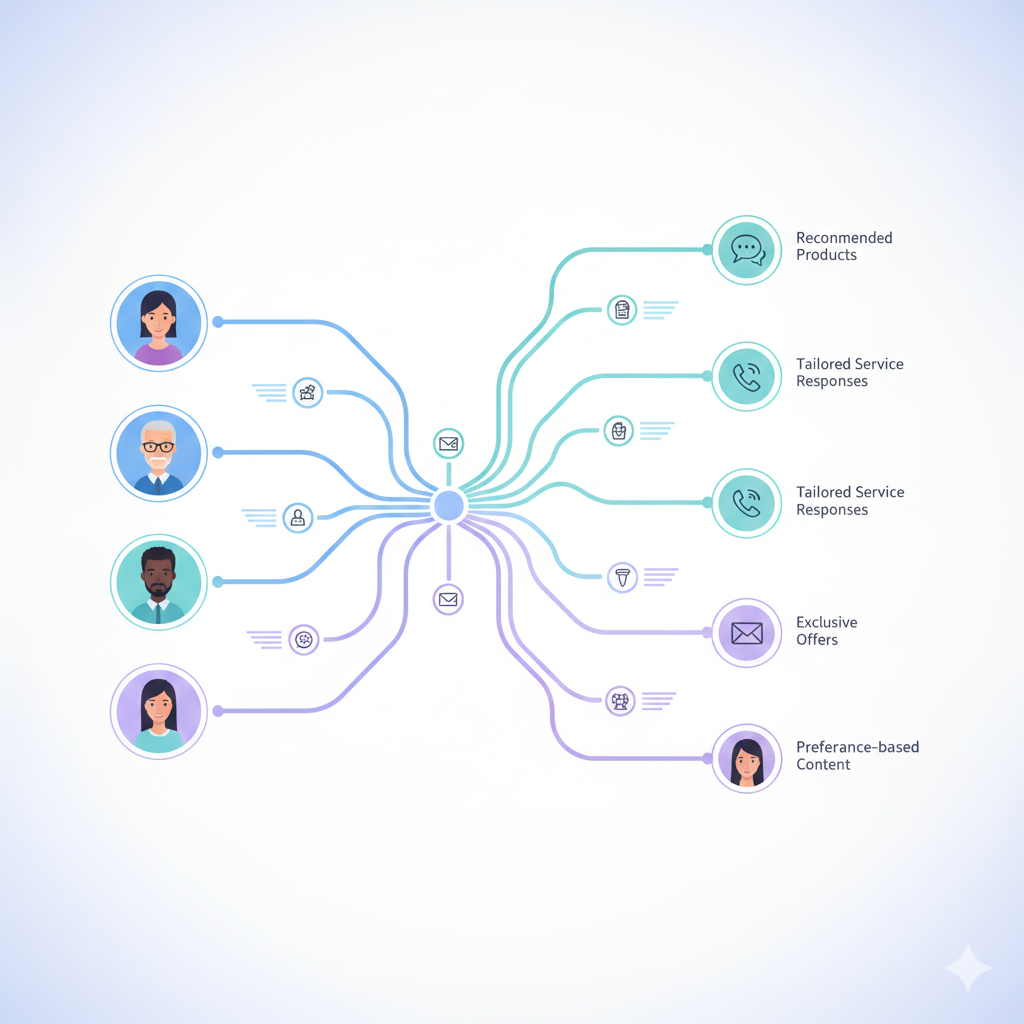
Every hospitality brand claims that exceptional service is personal. The problem has always been delivering personalization at the scale of thousands of daily interactions across properties with different systems, loyalty tiers, and guest histories. Traditional chatbots couldn’t bridge that gap. Agentic AI can.
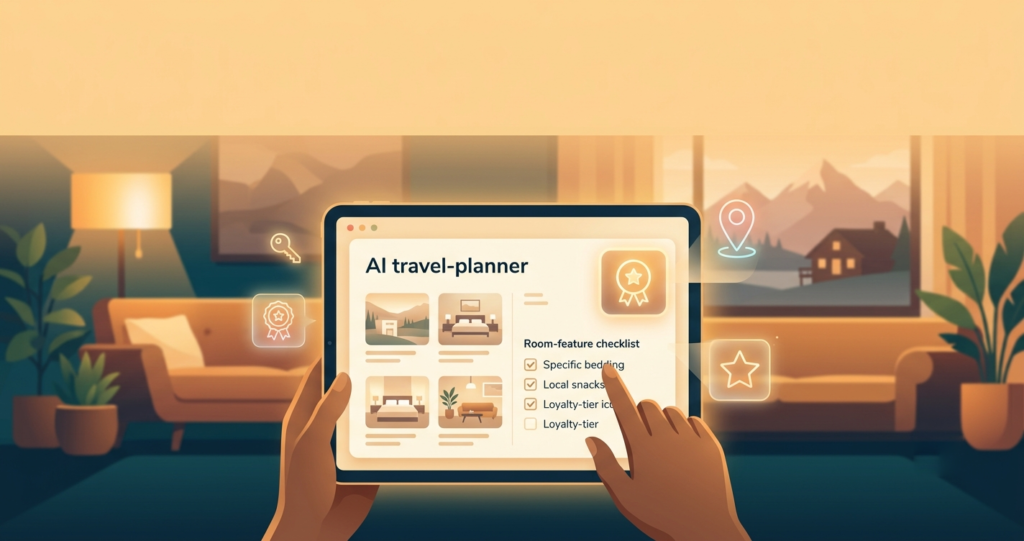
Hilton’s AI Planner — built on Claude and trained on Hilton’s full property content library — has been live since early 2026 with higher conversion rates compared to traditional booking flows. It works as a contextual travel advisor: understanding the guest’s intent, surfacing relevant property features, and guiding decisions in a way static search interfaces never could.
The commercial case is clear. Hotels with agentic AI in their direct booking flow are reporting direct-booking lifts of up to 14 percentage points and 19% reductions in cost-per-direct-booking (Hotel Tech Report 2026). On a $20M room-revenue property, that math translates to $400,000–$700,000 in annualised channel-cost savings — each direct booking representing a 15–25% OTA commission avoided.
Xanterra Travel Collection, which operates lodges across Yellowstone, the Grand Canyon, and Glacier National Park, deployed Cresta AI Agent to handle the extreme seasonal demand spikes its properties face. The results were concrete: a 74% average containment rate across properties, with Glacier’s AI agent “Skye” reaching 84%. When conversations require human judgment — complex itinerary changes, guest complaints — the system escalates with full context so agents can help immediately. The deployment also produced a $3.3 million revenue lift, reflecting something important: agentic AI in hospitality doesn’t just reduce cost, it actively creates value in the interactions it handles.
Angle 3: Contact Center Operations — What Changes When AI Joins the Team
The dominant fear around AI in contact centers has been displacement. The 2026 data tells a more nuanced story — and it’s one travel contact center leaders need to understand clearly.
Agent attrition in hybrid AI-augmented programs sits at 17%, compared to 26% in all-human programs (Boston Consulting Group, 2026). First-call resolution on human-handled tickets rose to 71% in hybrid programs, up from 58% before AI was introduced — because AI absorbs routine volume and leaves human agents with the interactions they’re genuinely best equipped to handle. The supervisor-to-agent ratio improved from 1:12 in 2024 to 1:18 in 2026 across programs that have deployed AI assist effectively.
The attrition improvement makes sense on reflection. Junior agents doing repetitive tier-1 work burn out fastest. When AI handles that layer, human agents spend more time on complex, meaningful conversations. Job satisfaction improves, tenure extends, and the performance gap between your best agents and everyone else narrows.
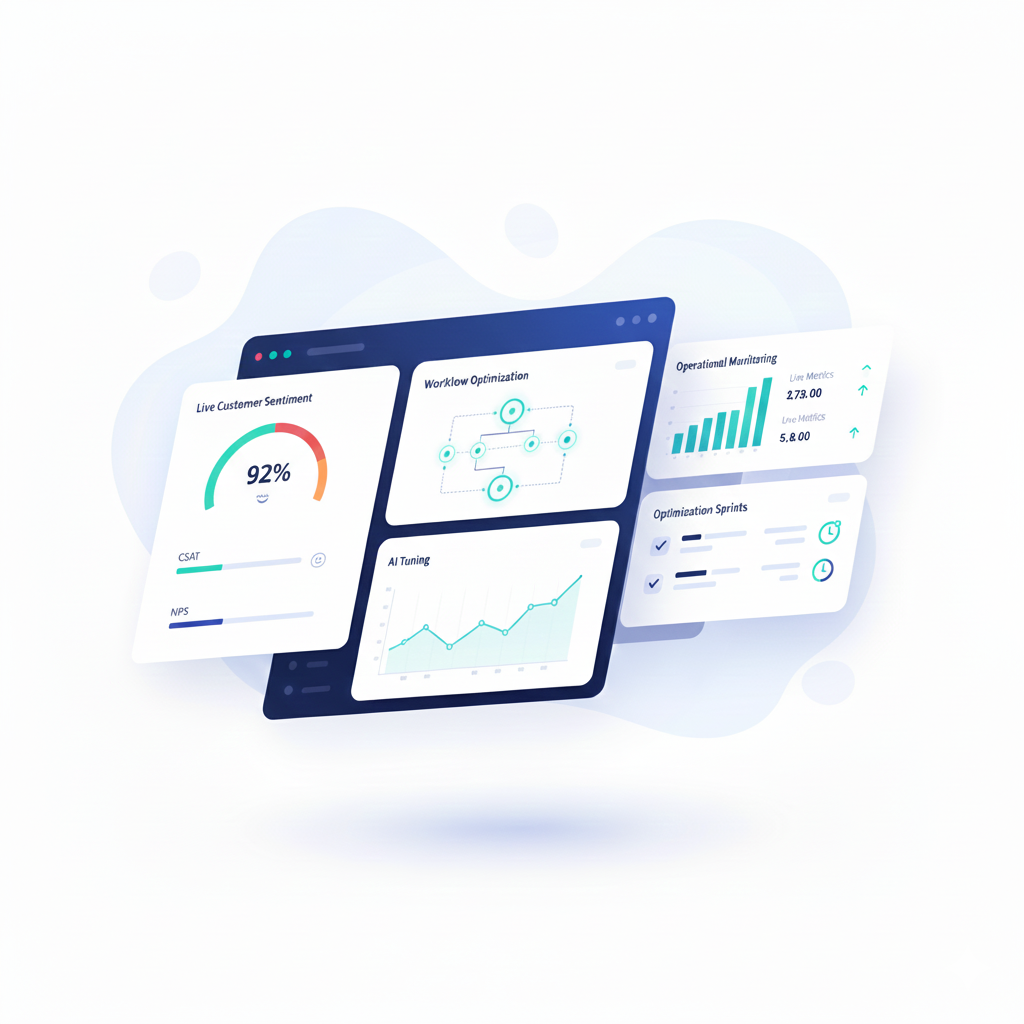
On the quality side, agentic AI eliminates the QA sampling problem. Traditional contact center QA reviews 5–10% of interactions and extrapolates. CVS Health’s deployment of conversation intelligence moved that number to 100% — every call scored, every emerging issue identified in real time, no more waiting weeks for feedback that arrives after damage is done.
For travel contact centers specifically — where disruption events spike complaint categories overnight and regulatory requirements around rebooking and compensation add compliance complexity — that real-time monitoring capability isn’t just useful. It’s essential.

Angle 4: What’s Coming Next — and Why Governance Is the Make-or-Break Factor
Voice AI is the defining structural shift of 2026. Forrester puts voice-AI at 19% of inbound contact center volume, up from 6% in 2024, with a 2027 forecast of 33–37%. Travel is catching up fast: flight status, rebooking, and check-in queries map cleanly to voice AI intents, while the emotional complexity of disruption scenarios creates a natural ceiling that demands seamless human escalation. Brands not investing in voice AI architecture now will be rebuilding from behind in 2027.
The longer-term shift is in distribution itself. The Sabre-PayPal-MindTrip pipeline signals an emerging agent-led layer that sits above OTAs and supplier direct channels. When AI agents acting on behalf of travellers become the primary interface for discovery and booking, contact centers don’t become less important — they become critical infrastructure in a different way. They manage the exceptions, handle the escalations, and serve as the human layer in an otherwise automated experience.
Not every deployment will succeed. Gartner forecasts that more than 40% of agentic AI projects will be canceled by end of 2027, due to unclear business value, escalating costs, or inadequate risk controls. In travel, the failure modes are specific and costly: an agent applying the wrong rebooking policy for an elite passenger creates a loyalty problem; mishandling a compensation claim in a regulated market creates a compliance problem; failing to gracefully escalate a distressed passenger creates an irreversible brand problem.
The brands getting this right — Xanterra, Malaysia Airlines, Hilton — treat agentic AI as infrastructure to be managed, not a feature to be launched. They invest as much in escalation criteria, governance frameworks, and continuous monitoring as they do in the technology itself.
The transition from “please hold” to instant resolution isn’t a future aspiration. It’s a production reality for the brands that moved first and moved deliberately. The question for every travel contact center leader in 2026 isn’t whether agentic AI will reshape their operation. It’s whether they’ll be shaping how it happens — or catching up to the brands that already did.
Data Sleek is an AWS Advanced Tier Partner specializing in Amazon Connect deployments for travel, hospitality, and contact center-intensive industries. Whether you’re deploying your first AI agent or scaling an existing deployment to full production, we bring the architecture, integration expertise, and governance frameworks that separate successful agentic deployments from the 40% that stall.
Ready to move from pilot to production? Talk to our team →