Most contact center leaders will admit this quietly:
AI sounds exciting… but deploying it still feels risky.
When your world runs on customer sentiment, consistency, and razor-thin margins, you can’t afford experiments that annoy callers or make agents’ lives harder. And the pressure keeps climbing — cost control, agent churn, rising expectations for self-service, and the never-ending push to improve CSAT.
Here’s the thing:
Even leaders who want AI are often held back by fear. In fact, recent industry discussions show that nearly 70% of CX leaders hesitate to deploy AI because they’re worried about damaging customer experience.
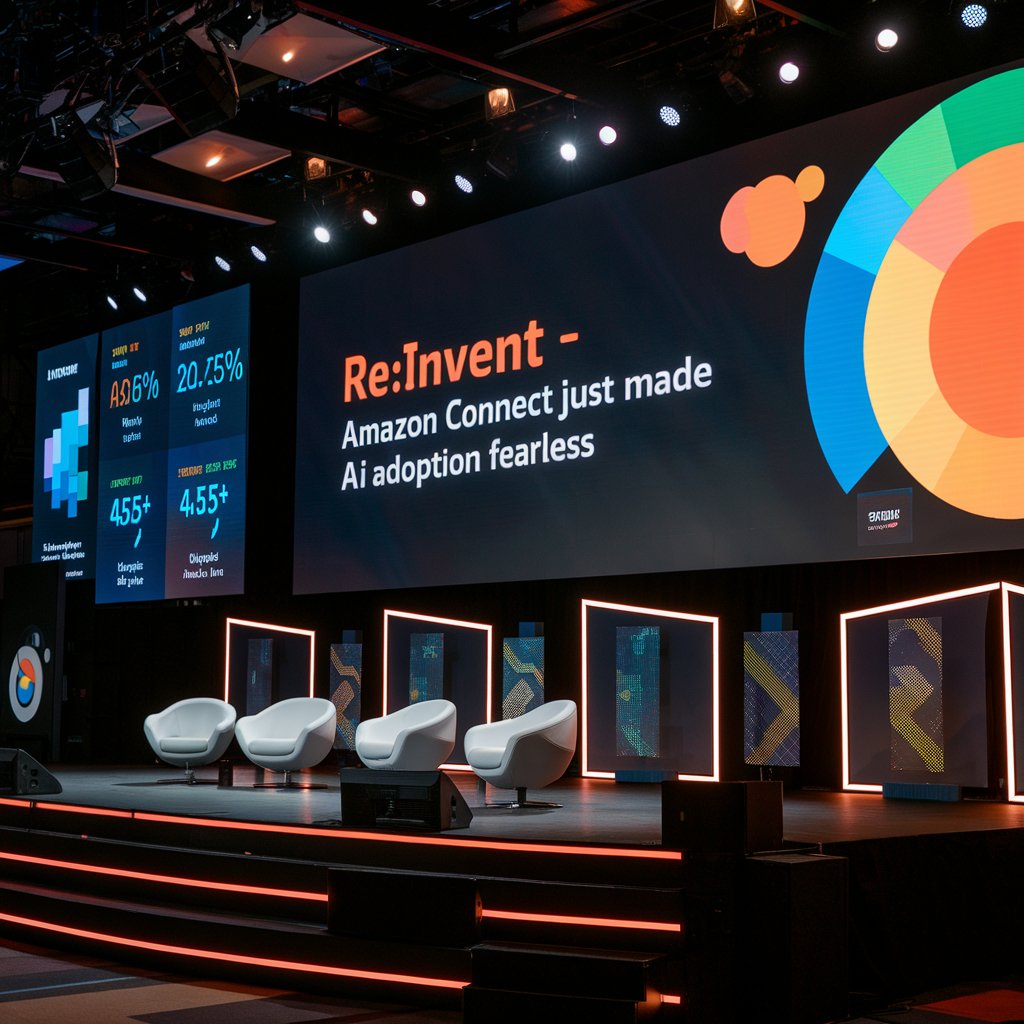
That fear is real. But at AWS re:Invent this year, one major message resonated:
AI doesn’t have to feel scary anymore.
Amazon Connect is intentionally redesigning the AI adoption journey so leaders can move from anxiety to action — without ripping their systems apart or praying the AI doesn’t go rogue.
Let’s break down what’s changed.

1. Evolution, Not Disruption
The loudest message from AWS this year was simple and refreshing:
You don’t need a revolution to adopt AI. You just need the next step.
Keith Ramsdell summed it up perfectly when he said Amazon spends most of its time helping customers take “evolutionary steps, rather than revolutionary steps.”
This philosophy now defines Amazon Connect’s product direction.
Why it matters
Historically, AI adoption felt like a huge gamble:
Big, expensive transformation projects
Heavy engineering involvement
Unpredictable outcomes
Months of training, tuning, integration
So companies often pushed AI to “next quarter”… over and over.
That’s changing.
Pre-built autonomous agents: Value on day one
Amazon Connect now provides pre-built agents that don’t require custom development to start contributing. These agents handle common tasks — resetting passwords, checking order status, updating tickets — straight out of the box.
Leaders immediately get:
Faster time-to-impact
Lower deployment cost
Less reliance on in-house engineering
A safer way to start testing AI in live environments
A quick scenario
Imagine a retailer overwhelmed with holiday support volumes. Instead of spending 6 months training an AI agent, they deploy a pre-built workflow that handles order-tracking calls with zero coding.
Agents spend less time checking shipping data.
Customers get answers instantly.
Supervisors don’t drown in escalations.
That’s the promise: results now, risk reduced.

2. Connecting the Brain to the Hands: MCP Explained Simply
One of the most misunderstood—but most important—updates this year is the introduction of MCP (Model Context Protocol).
It sounds technical, but here’s the easy version:
Brain = the AI model
Hands = your CRM, ticketing, knowledge base, or order system
Before MCP, AI could talk but couldn’t do much.
It was like hiring someone smart but tying their hands behind their back.
MCP fixes that.
It allows the AI to reach into your operational systems safely and execute tasks that used to require human agents.
Real outcomes made possible
With MCP, AI can now:
Cancel or modify orders
Initiate refunds
Create or update support tickets
Verify user details
Pull CRM history
Trigger workflows in external systems
This moves AI from being a “nice conversational layer” to a genuine worker in your ecosystem.
A simple illustration
Old way:
Customer: “I want to cancel my order.”
Bot: “I’ve sent your request to an agent.”
Agent manually opens CRM and processes cancellation.
New MCP way:
Customer: “Cancel my order.”
AI: “Done. I’ve processed the cancellation and issued your refund. You’ll get a confirmation email shortly.”
Accuracy improves.
Compliance gets easier.
Interaction time drops instantly.
The leap in productivity is real — and measurable.

3. The End of Robotic Conversations: Nova Sonic 2 Arrives
Let’s be honest.
Most voice bots today sound like microwaves trying to learn English.
Monotone. Rigid. Awkward pauses. No understanding of emotion.
Amazon Connect’s Nova Sonic2 is a major break from that era.
What makes Nova Sonic 2 different
Nova Sonic 2 includes:
Tone and sentiment detection
Real-time interruption handling
Natural pacing adjustments
More human-like conversational flow
The AI no longer just waits for a pause — it reacts like an actual agent. It understands frustration. It slows down or speeds up depending on context. It maintains empathy.
Why this matters for CX
Customers don’t just want accurate answers.
They want to feel understood.
When Keith said, “With Nova Sonic 2 , you’re not just able to understand what the customer says, but how they say it,” he captured the real breakthrough.
That shift — from transaction to interaction — is what finally makes voice AI usable at scale

4. Opening the Voice Ecosystem: Choice, Not Lock-In
One of the more surprising announcements was Amazon Connect opening the door to third-party speech engines.
Support now extends to tools like:
ElevenLabs
Deepgram
And other emerging voice providers
For a company the size of Amazon, this is a rare move. Big vendors typically keep customers inside their walled gardens. But AWS recognized that different industries need different voice identities.
Where this becomes powerful
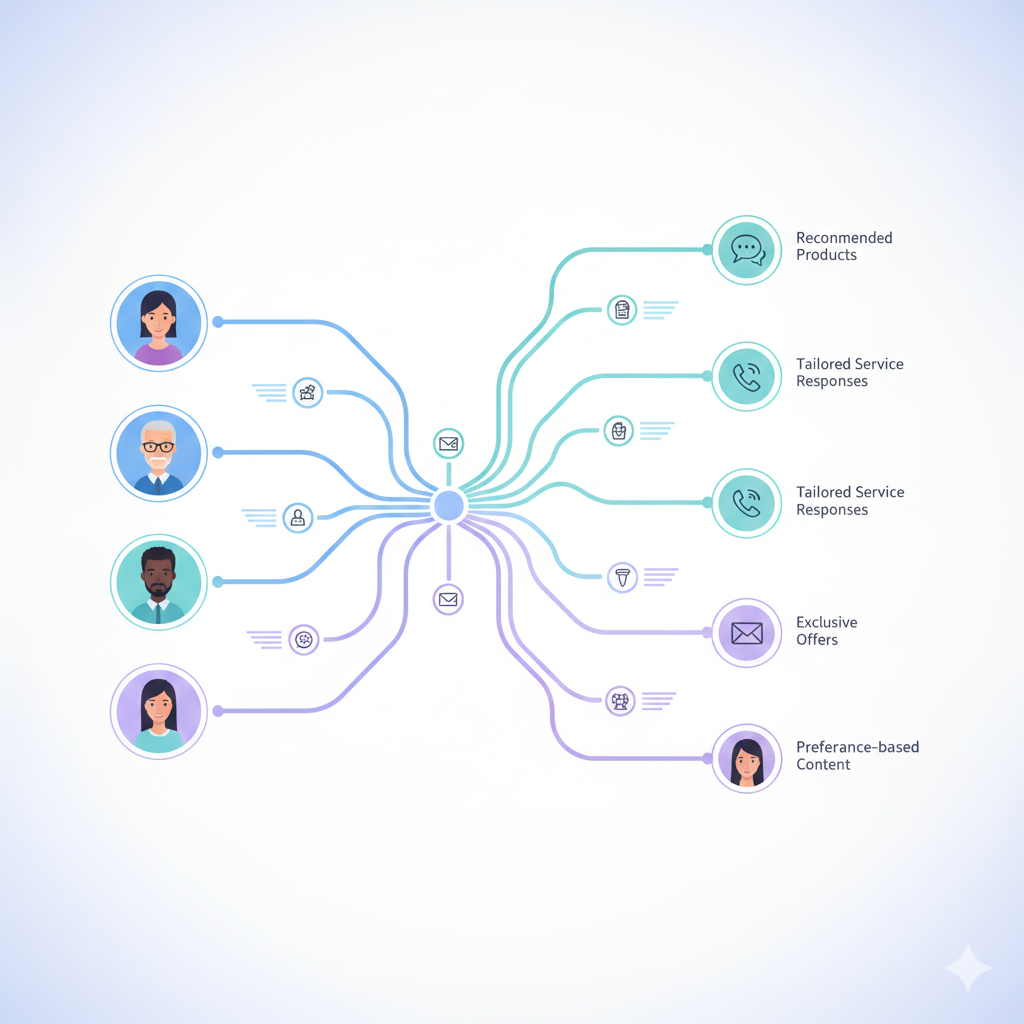
Luxury brands using premium voice styles
Airlines needing multilingual support at native fluency
Healthcare providers wanting calm, empathetic tonality
Startups experimenting with differentiating customer voice experiences
By removing lock-in, Amazon Connect becomes a platform that adapts to your brand — not the other way around.
This is real customer-centric engineering.

5. A Flight Simulator for AI Deployment
Now we get to the feature that will make the biggest emotional impact on leaders:
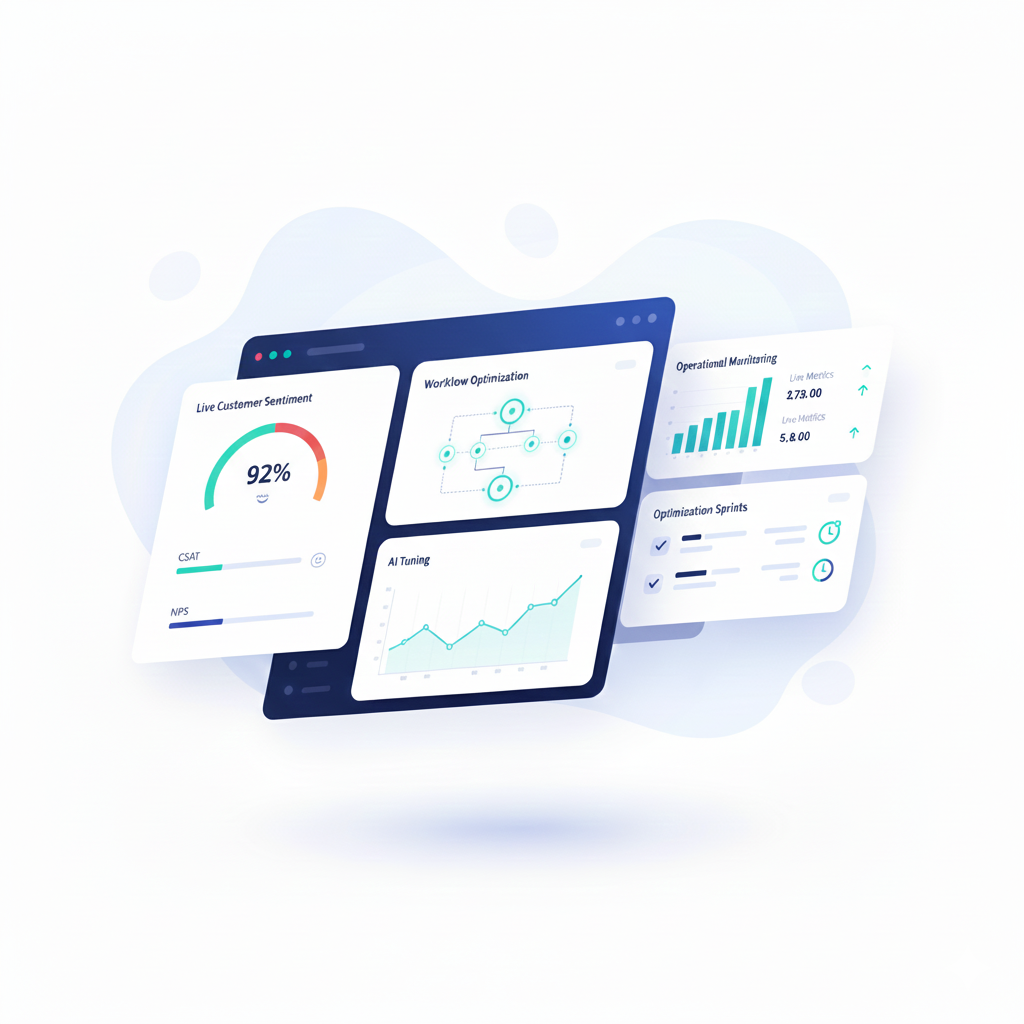
AI simulation tools + observability dashboards.
The biggest fear with AI is that it will behave unpredictably with real customers. Companies worry about hallucinations, incorrect answers, or compliance violations.
Amazon Connect now eliminates that fear by letting you:
Test thousands of simulated interactions
Stress-test edge cases
Identify risky decision paths
Validate compliance behavior
See exactly how agentic AI will perform before launch
It’s like a commercial airline simulator — but for your contact center.
You don’t put an AI “in the sky” unless it has passed every scenario on the ground.
As AWS puts it:
Trust before transformation.
Deployment confidence jumps dramatically once leaders see the AI behave safely across a full range of customer journeys.

6. Relief for Supervisors: The Quiet Winners
There’s one group that often gets overlooked in AI discussions: supervisors.
These updates finally give them a break.
With pre-built agents, smarter voice AI, and better observability:
Fewer escalations
Less real-time firefighting
Better coaching opportunities
Clearer insight into agent performance
Less guesswork and more data
They can spend time developing agents, improving workflows, and analyzing trends — not chasing down daily crises.
In many ways, supervisors are the biggest beneficiaries of this calmer, more predictable AI era.
As one AWS leader put it,
“Supervisors can finally breathe.”

The Bottom Line
Amazon Connect’s updates aren’t about flashy AI demos or hype-filled predictions.
They’re about something far more practical:
Making AI deployment feel safe, incremental, and genuinely beneficial from day one.
For contact center leaders juggling cost pressures, quality expectations, and constant firefighting, this shift is huge.
Pre-built agents reduce lift
MCP gives AI real operational power
Nova Sonic 2 makes voice interactions human
Third-party voice support unlocks choice
Simulation tools remove deployment fear
Supervisors gain much-needed relief
This is what AI adoption should look like — grounded, measured, and customer-first.
AWS Re:Invent made one thing clear:
The question is no longer “Should we adopt AI?”
It’s “How soon do you want to start feeling the relief?”