
In today’s fast-paced customer service environment, email remains a critical channel for customer communication. While chat, voice, and social channels are gaining traction, email still plays an important role for customers who prefer detailed, asynchronous conversations. Amazon Connect, a flexible cloud contact center solution, supports email handling through its integrations and workflows. But to get the most out of email in Amazon Connect, you need clear best practices for setup, routing, and management.
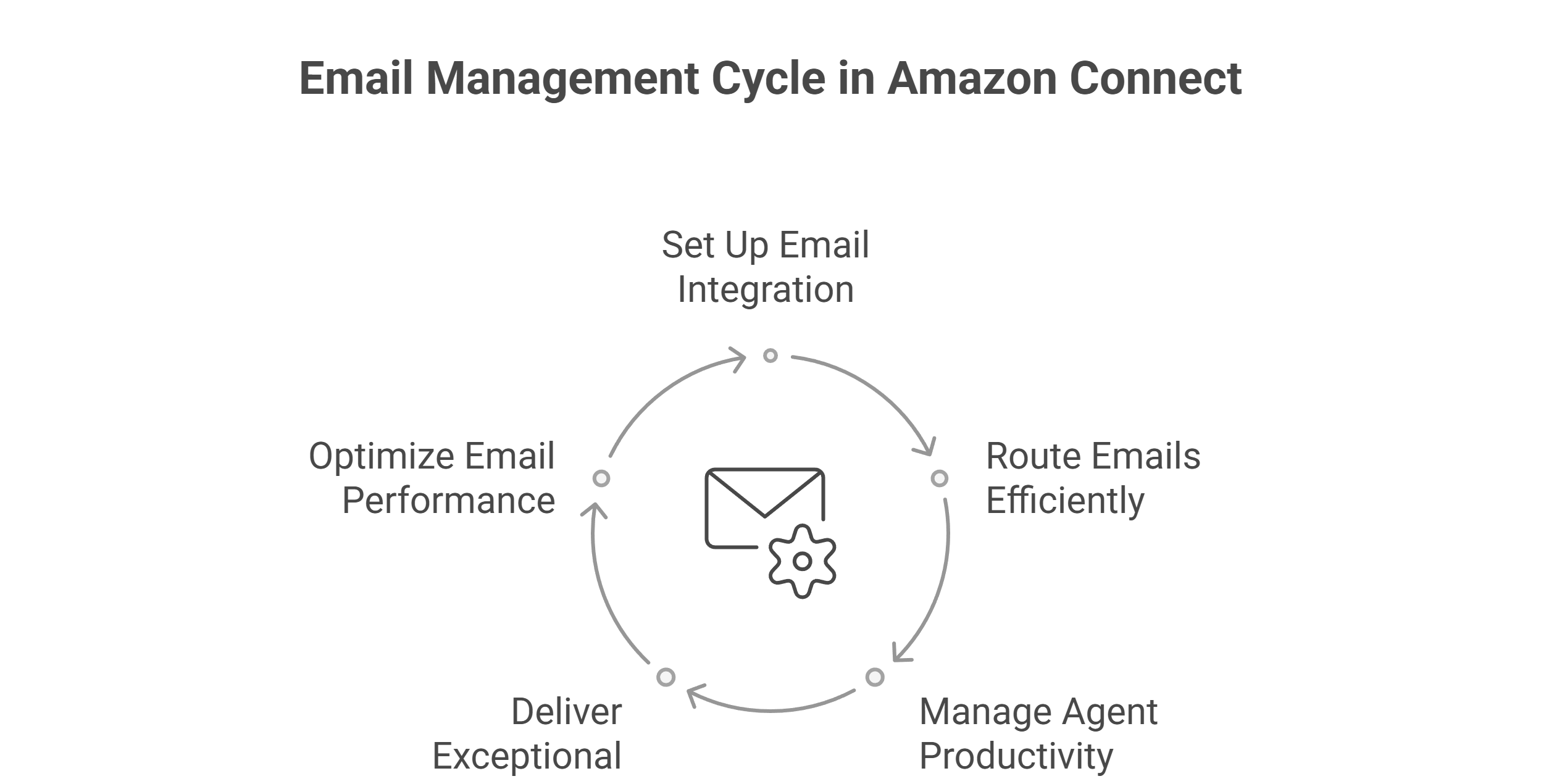
In this blog, we’ll explore how to manage email efficiently in Amazon Connect flows, keep your agents productive, and deliver exceptional customer experiences.
Why Should Businesses Prioritize Email Management in Amazon Connect Flows?
Even in a digital-first era, customers rely on email for important inquiries — whether it’s billing, order tracking, complaints, or complex support issues. Without a streamlined process, businesses risk delays, inconsistent responses, and frustrated customers.
By managing emails effectively within Amazon Connect flows, you can:
- Route messages to the right team automatically
- Maintain detailed context for agents
- Reduce customer wait times
- Improve service quality and compliance

How Can You Set Up Seamless Email Routing in Amazon Connect for Better Efficiency?
Routing is the foundation of efficient email handling. The goal is to ensure every email lands in the right agent’s queue without unnecessary handoffs.
Best practices for email routing:
- Categorize Emails by Intent – Use keywords or AI to identify the nature of the request.
- Leverage Routing Profiles – Assign agents to specific queues based on expertise.
- Integrate with CRM Systems – Ensure agents have full customer context before responding.
- Automate High-Volume Queries – Use workflows to send auto-replies for common questions.

What Steps Help Maintain Consistency and Quality in Email Responses?
Customers expect a clear, consistent brand voice in every interaction. That means your email replies need to be accurate, professional, and aligned with your company’s tone.
Best practices for response quality:
- Create Email Templates – Reduce errors and maintain consistency.
- Use AI-Powered Suggestions – Tools like Amazon Q in Connect can help agents compose replies faster.
- Centralize Knowledge Bases – Ensure agents can quickly access accurate information.
- Conduct Quality Audits – Review email samples regularly to maintain high standards.

How Can You Use Automation to Improve Email Handling Without Losing the Human Touch?
Automation can save time and boost productivity, but it needs to be applied strategically.
- Automated Acknowledgments – Let customers know you’ve received their email and when they can expect a reply.
- Intelligent Routing – Direct urgent cases to priority queues.
- Workflow Automation – Trigger internal processes based on customer requests.
What Role Does Reporting and Analytics Play in Email Performance Optimization?
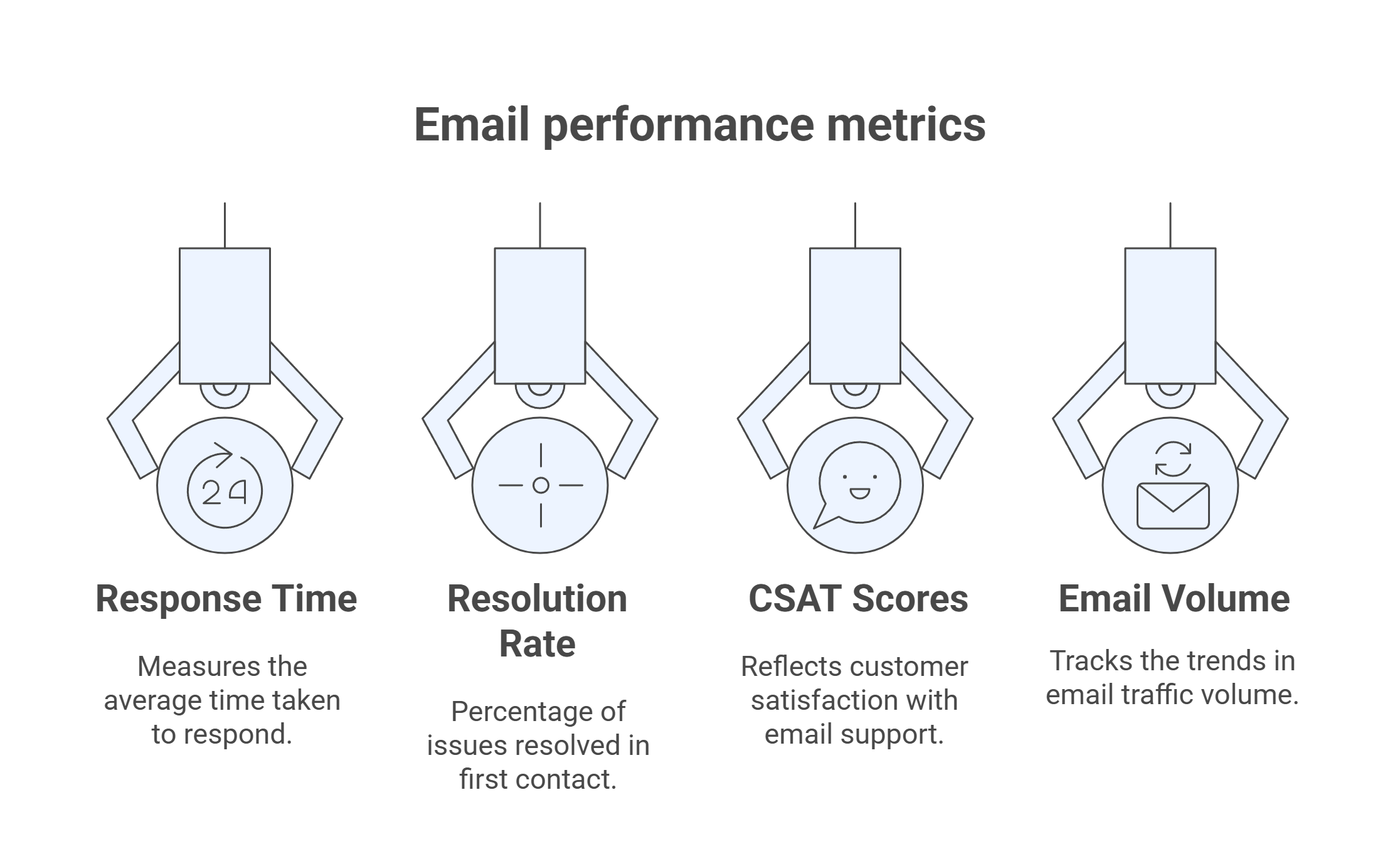
You can’t improve what you don’t measure. Amazon Connect offers robust reporting tools to track email performance.
Key metrics to monitor:
- Average response time
- First contact resolution rate
- Customer satisfaction (CSAT) scores
- Email volume trends
Analyzing these insights helps you:
- Identify bottlenecks
- Improve staffing decisions
- Optimize response strategies
How Does Data Sleek Help You Streamline Email Workflows in Amazon Connect?
At Data Sleek, we help businesses get the most out of Amazon Connect by:
- Designing optimized email routing flows
- Integrating Amazon Connect with CRM and knowledge management systems
- Automating common email handling tasks
- Setting up real-time reporting dashboards for continuous improvement
Our expertise ensures your agents spend less time searching for information and more time delivering great customer experiences.

Conclusion
Email isn’t going away anytime soon — and with the right strategy, it can remain one of your most effective customer service channels. By applying these best practices in Amazon Connect flows, you can handle high volumes efficiently, maintain response quality, and keep customers happy.