If you work in or around a contact center, you’ve probably heard the question more times than you can count: Will AI replace human agents?
It’s a fair concern. Generative AI is advancing fast. Virtual assistants are fielding customer questions, bots are deflecting calls, and predictive tools are helping managers decide staffing levels. Some headlines even suggest that contact center agents might become obsolete.
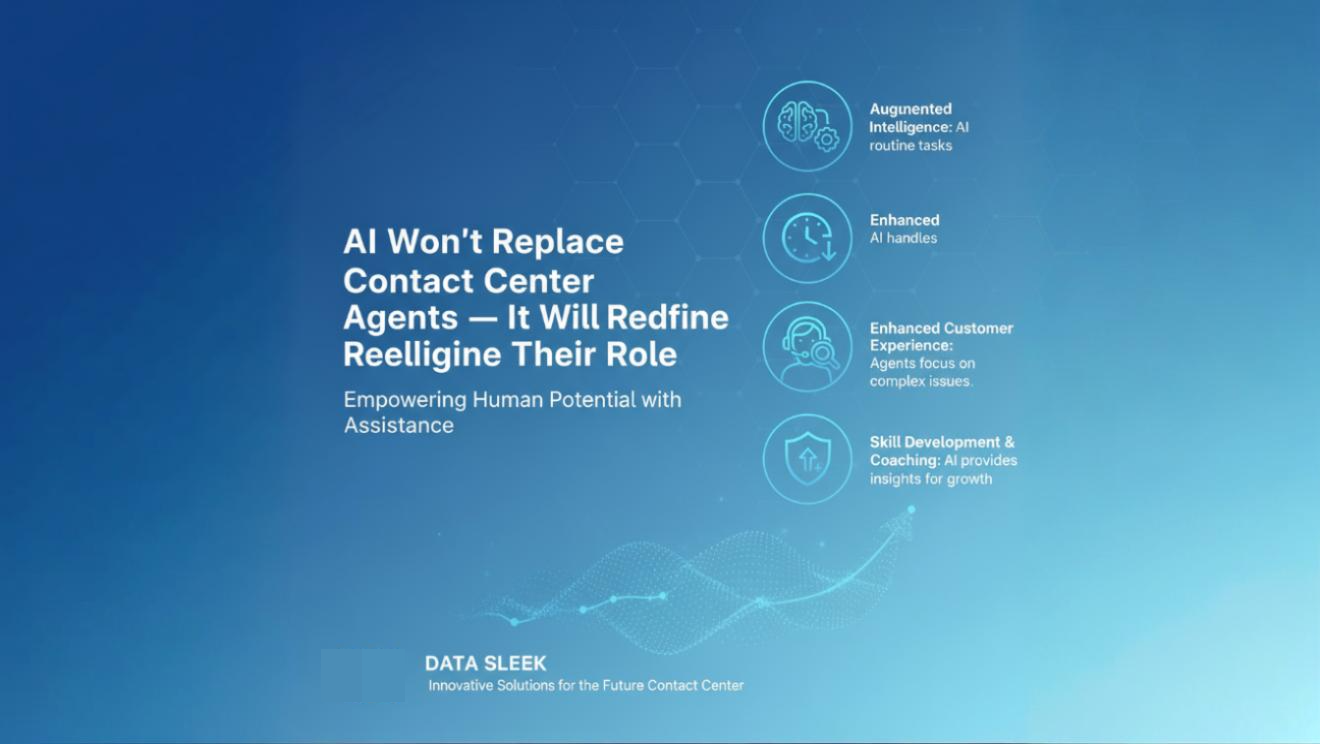
But here’s the truth: AI isn’t here to eliminate human agents — it’s here to transform their role. The future of customer experience won’t be a bot-only world. Instead, it will be a partnership between AI and people, where technology handles the repetitive heavy lifting, and humans focus on the complex, the emotional, and the truly valuable interactions.
Let’s break down how this shift is playing out — and why companies like Data Sleek are helping contact centers embrace the change with confidence.

The Rise of AI in Contact Centers

Over the past five years, AI adoption in customer service has exploded. Contact centers are using AI for tasks such as:
Chatbots and virtual assistants to handle simple FAQs.
Call deflection to route routine queries to self-service channels.
Predictive routing to connect customers with the best-fit agents.
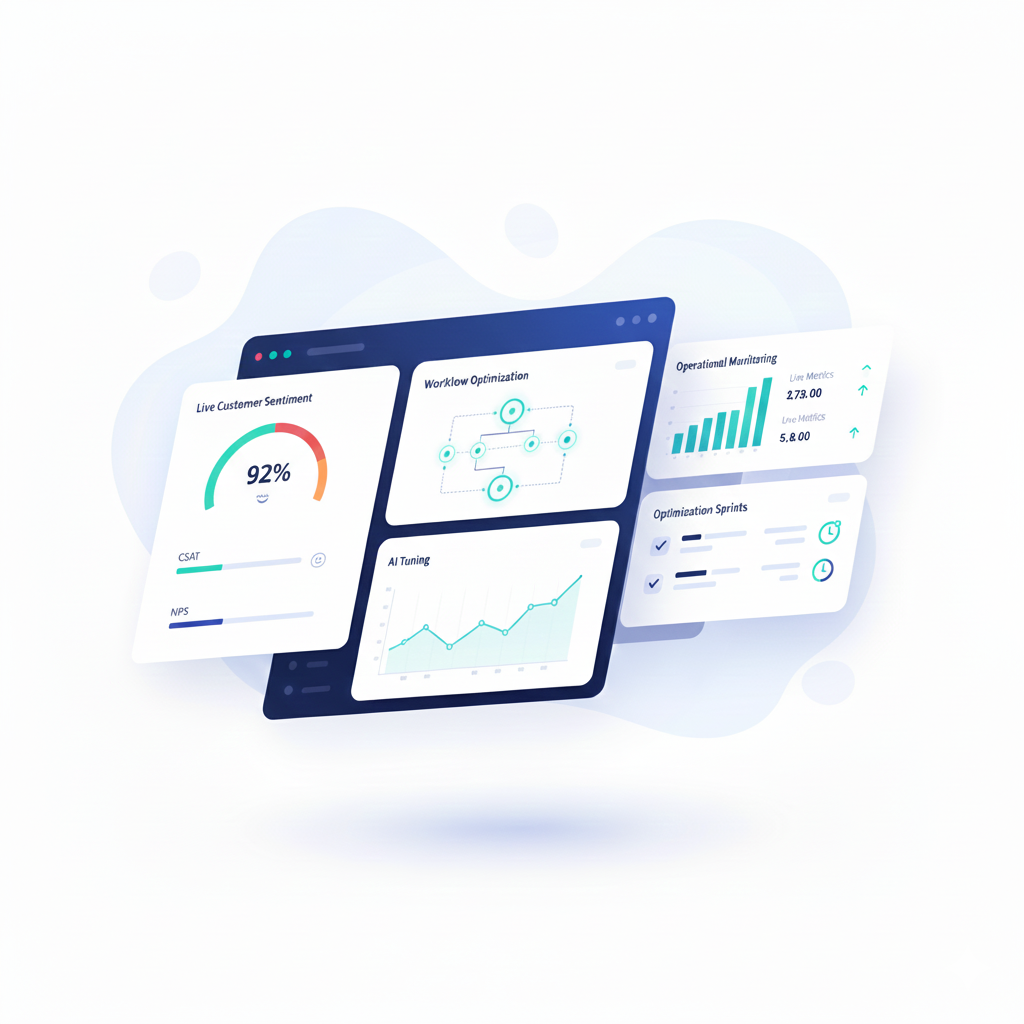
Sentiment analysis to gauge how a customer feels during a conversation.
Real-time translation for multilingual support.
The benefits are clear: faster service, reduced costs, and the ability to scale without adding headcount. Gartner predicts that by 2026, AI will handle 20% of all contact center interactions — a huge leap from today.
No wonder enterprises are investing heavily in AI-powered platforms like Amazon Connect. They see efficiency gains, reduced wait times, and the chance to differentiate on experience.
But AI has its limits. And those limits are exactly where human agents come in.

The Human Factor: Why Agents Still Matter
Here’s the thing: customers don’t just want answers — they want empathy.
Imagine you’ve just lost your credit card while traveling. A chatbot can cancel it and issue a new one, sure. But when you’re panicked about fraud, you want to hear reassurance from a person who understands what you’re going through.
Or consider healthcare disputes, insurance claims, or sensitive billing issues. These situations aren’t just about facts; they’re about context, trust, and nuance. AI can generate words, but it can’t offer genuine compassion.
Even in less emotional scenarios, humans are critical. Complex troubleshooting, negotiations, and exceptions to the rule are often beyond AI’s capabilities. Over-automation can actually backfire, creating customer frustration and damaging brand loyalty.
That’s why human agents aren’t going away — they’re becoming more essential than ever. Their role is simply changing.

Redefining the Agent’s Role
So what does this new role look like? Think of today’s agents as evolving into super-agents.
Instead of spending their time on repetitive, transactional queries, agents will focus on:
Handling escalations that AI can’t resolve.
Supervising AI outputs, correcting mistakes before they reach the customer.
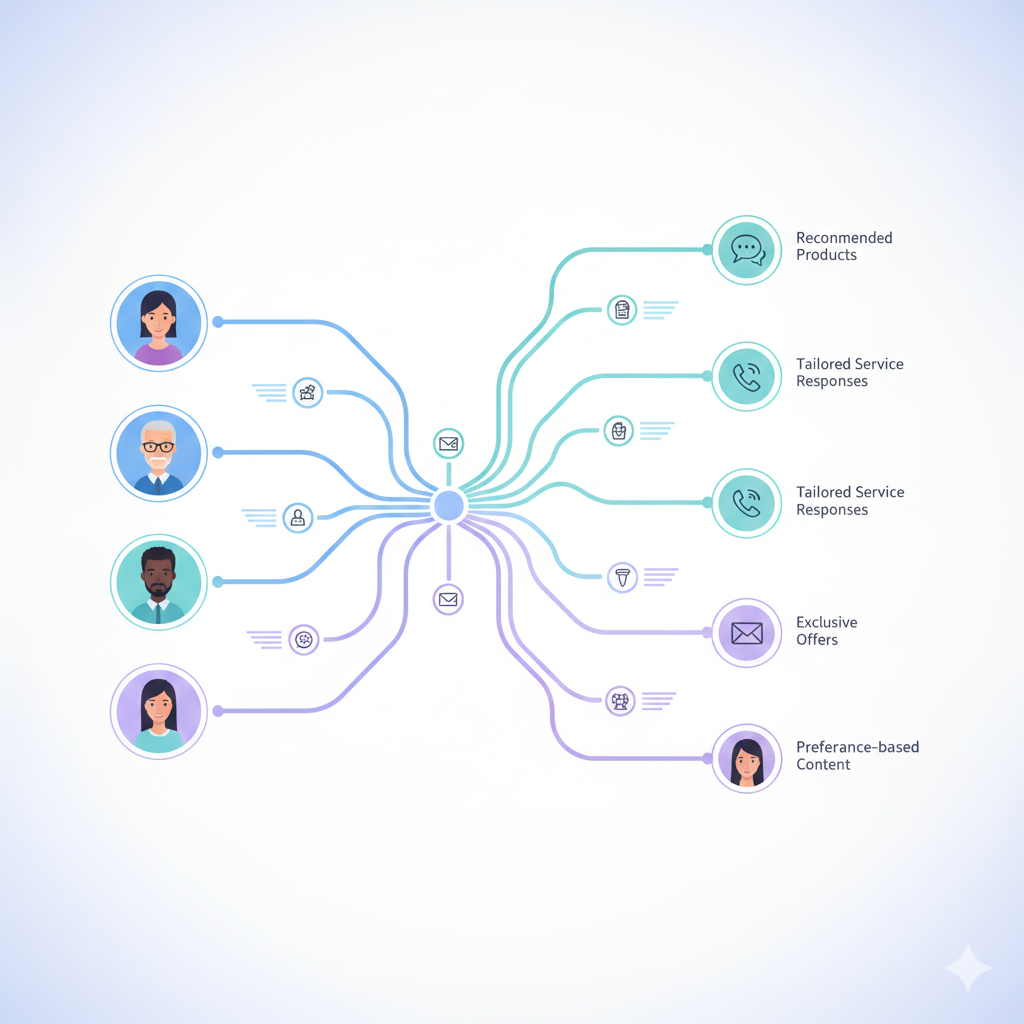
Using AI-driven insights to personalize conversations in real time.
Building relationships that deepen loyalty and trust.
In other words, the agent becomes less of a script-follower and more of a problem-solver, coach, and advocate.
And here’s the kicker: when AI handles routine tasks, it actually frees up agents to do what they do best — connect with people. That shift leads to more fulfilling jobs for agents, better outcomes for customers, and stronger ROI for businesses.

The AI + Human Partnership Model
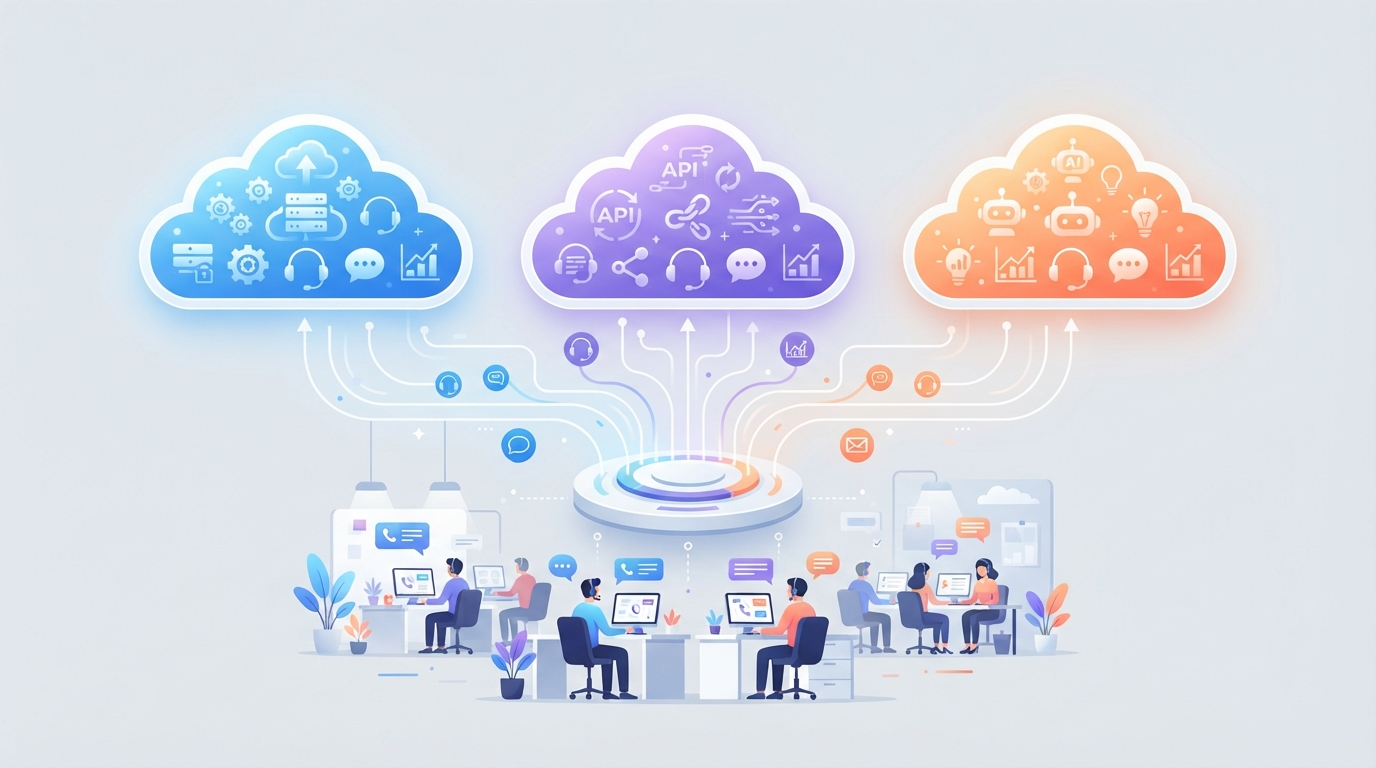
The real power lies in pairing AI with human expertise. Let’s look at some examples from Amazon Connect, AWS’s cloud-based contact center solution:
Real-Time Agent Assist with Amazon Q
Agents get AI-generated suggestions during live calls, so they don’t waste time searching for answers.Knowledge Bases with Retrieval-Augmented Generation (RAG)
AI surfaces the right policy, procedure, or product info instantly — but the agent applies judgment and context.Context-Aware Routing
Calls are routed based on customer history and sentiment, ensuring the best agent is matched.Automated After-Call Work
AI transcribes, summarizes, and tags interactions, letting agents move quickly to the next customer.
This “AI Co-Pilot” model doesn’t replace agents — it empowers them. AI does the heavy lifting behind the scenes, while humans focus on the conversation in front of them.

Where Contact Centers Still Struggle
Even with powerful tools, many contact centers struggle to realize the promise of AI. Common challenges include:
Poorly tagged knowledge bases that confuse both AI and agents.
Gaps in compliance monitoring, especially in regulated industries like BFSI and healthcare.
Lack of fine-tuning for industry-specific needs.
Difficulty integrating AI insights into day-to-day workflows.
This is where the right partner makes all the difference.

How Data Sleek Helps Enterprises Redefine Agent Roles
At Data Sleek, we’ve seen firsthand how contact centers can thrive when they approach AI adoption strategically. Our work goes beyond just deploying Amazon Connect. We help enterprises:
Design AI-empowered architectures that minimize risks like hallucinations.
Implement retrieval pipelines (RAG) to ensure agents always get accurate, context-aware information.
Automate compliance and monitoring, so sensitive industries can trust AI outputs.
Train and support agents so they know how to work effectively alongside AI tools.
The result? Contact centers that don’t just “use AI” — they harness it in a way that makes agents smarter, customers happier, and the business more resilient.
One of our clients, a leading BPO, reduced average handle time by 30% after implementing AI-assisted workflows with Amazon Connect. But more importantly, their agents reported higher job satisfaction because they could focus on meaningful interactions rather than repetitive tasks.

The Future of Work in Contact Centers
The shift is already happening. In the near future, we’ll see:
Agents evolving into AI supervisors, guiding machine outputs and stepping in when nuance is needed.
Contact centers becoming more about customer strategy than call volume.
Continuous upskilling as agents learn to use AI as a co-pilot rather than a competitor.
AI won’t erase the need for human connection. It will amplify it. The brands that succeed will be those that build hybrid workforces where AI and people each play to their strengths.

Conclusion: A Redefined Partnership
The fear that AI will replace contact center agents is understandable, but it misses the bigger picture.
AI is here to redefine — not erase — the agent’s role. By handling the repetitive and the routine, AI allows humans to focus on empathy, complexity, and trust. Together, they create experiences that are faster, smarter, and more human.
At Data Sleek, we’re helping enterprises design this future today. From Amazon Connect migrations to AI-enhanced agent workflows, we’re proving that when AI and people work side by side, everyone wins: customers, agents, and businesses alike.